Saturday, November 22, 2014

Visit to La Plata: Couchsurfing Style

A map of the city clearly displaying its mathematical design
About a month ago I had the opportunity to visit La Plata, a city of about a million inhabitants about 40 minutes south of Buenos Aires. La Plata, the name, has several different meanings. In Spanish it means "silver," in Porteño it means "money," or "Silver Dollar City" in English if such a place exists. Regardless, La Plata is the capital of the Province of Buenos Aires and has just celebrated its 132nd anniversary.

Visiting La Plata from Buenos Aires is like moving from a rushing river to a calm flowing stream. Everything is slower, quieter, more organized, and less "rushed." Granted there probably is a rush hour, and stress, but the mathematical way the city was structured, by the city planner Pedro Benoit, allows for maximum efficiency with minimal dysfunction. Indeed, instead of street names, each street is numbered mathematically on a cuadrant so you can know, if you understand the layout of the city, exactly where you are and exactly where you need to go just based on the street numbers. This is partially true in Buenos Aires--only partially.


A view from outside the Cathedral of La Plata
I travelled to La Plata couchsurfing style, for a couchsurfing event in which one of my students invited me. I have to say many of my experiences have been akin to dipping my toes in different pools without actually plunging into any single one, save perhaps life in Buenos Aires, but I suppose you can't dive into'em all. You live in one pool while occasionally dipping into others.


The couchsurfers of La Plata are a very close-knit group, very open and inviting, especially to foreigners. They also tend to view Porteños similarly to how a Vermonter feels about a New Yorker: as a necessary nuisance. Four of us carpooled to La Plata, where we met the group in a large, open plaza in the center of the city. We chatted until midnight, at which point we realized our hunger and had a typically late Argentine dinner, finishing up at 1-1:30.


As it was a couchsurfing event, we were invited to stay in the apartment of one of the couchsurfers from La Plata. We all crammed onto tiny mattresses for an authentically couchsurfing experience. Unfortunately for the other American in the group, his air mattress deflated during the night, and he awoke to the sensation of a hardwood floor and perhaps a stiff back.
Another view of the Cathedral
From inside the Cathedral


On Saturday three of us went out to get facturas and juice for breakfast, and in the afternoon we headed to the neo-Gothic cathedral, the construction of which took one hundred years--more than a generation. We had the opportunity to travel up the glass elevator to get a good view of the city. Unlike Buenos Aires, La Plata isn't a tall city, and most of the buildings were no more than three storeys, giving us an expansive view to all sides from perhaps the highest point in the city.

Animalitos!!!!!!!

Finally we finished in one of the expansive parks for the Feria Internacional Folklore, a music fair happening during that weekend. I had seen the little furry animal advertisements for the Feria in Buenos Aires and I was really hoping to get a glimpse of the little animalitos, or maybe keep one as a pet. After searching intently for some time through the expansive parks, I spotted the animals with their instruments and endeavored to approach them but I was stopped by some burly security men.

Claudia recommended I should jump the fence and rush the animalitos as though I were a hysterical fan. This I tried, but was promptly hauled down and crushed beneath the meaty stomachs of four security guards. They told me never to interfere with the fair again, and if I did they would need to deport me. I laughed madly at their vane words and, intending to clamber over the fence once more, and was immediately tazed into a compliant and malleable daze. I can't vouch for the validity of this story.  

Exhausted by the efforts expended upon acquiring one of the furry animalitos, I took a long nap in the grass and then went to listen to some music while some of the couchsurfers slacklined and others drank iced mate with juice, known as tereré. 

Four of us returned to Buenos Aires by taking the bus 29, which connects La Plata to Buenos Aires. The cost was relatively inexpensive, and had several stops on 9 de Julio, which is very convenient for anyone needing to or from La Plata. The cost itself was only $25 pesos one way.

The most interesting part of this rather uninteresting return to Buenos Aires was having to watch a drunk stumble around the bus terminal in an intoxicated stupor and muttering disconnected syllables in a language not dissimilar to Spanish. His fly was also unzipped--one cannot help noticing such things sometimes. As a side note, and it probably goes without mentioning, only use the restroom in the La Plata bus station as a last resort. Imagine rationed toilet paper, wet, sticky floors, and odors of stale pee and you're not far away from reality.

Aside from those minor inconveniences my experience in La Plata was a positive one, and it's a nice change of rhythm from the rush of Buenos Aires to something calmer--a dip into a calmer stream perhaps.
A great example of the intricacy of the stonework


Cheers and all best,

Kyle


Sunday, October 26, 2014

Feria de Masticar 2014

Hello everyone,

I return after a long and busy absence. I believe it has been a month and a half, more or less, since my last posting, which is due to a variety of factors including heavy workload during the week, and weekends spent out of the house or away from home.

In any case here we are again--and the world keeps spinning so I'll keep jotting down these experiences, if only to occupy some of that empty space in that ceaseless earthly rotation.

I would like to spend this blog talking about a recent fair I had the opportunity to attend. The annual Feria de Masticar--Food Fair of Buenos Aires--occurred during the 17th-19th of October, in a large, enclosed public space used for city-wide events. Very well-organized, the fair was divided into sections based on types of foods or beverage; there were sections for coffee and tea, fruit and vegetables, desserts, asado, sandwiches, beer, wine, and just about any other tasty food related item popular in Buenos Aires culture.

I had been feeling a little depressed that day -- yes, I'll be open about that -- but as I had been looking forward to this fair for the entire week I wasn't going to let the moody blues bring me down; though I found it a touch of comic irony in going to an enjoyable event and eating good food, and yet feeling deeply saddened. I apologized to my girlfriend ahead of time for the slightly nihilistic outlook I was bringing to that evening's entertainment. Yet as with most-authentic human endeavors I beat on in self-consumed loathing, which I found nothing short of tragicomic-- funny in it's self-centeredness--but that is beside the fact.

Crowds and food for everyone.
The highlights of the fair for me were twofold. The first is that the fair had something for everybody. No matter an individual's interests in life, one must at some point eat--and Masticar literally had food to appeal to anyone's culinary interests. We stopped at vegetable stands, at coffee bars, and several different restaurant locations: and received exceptional service, explanations on the products offered, and other locations we could obtain their products.


$10 peso gourmet salad! I'll take that any day.


Specific examples of the good stuff include learning about organic produce and where it can be found in the city; a big challenge considering most if not all produce in supermarkets and verdulerias is not organic or, if it is, it isn't labeled as such. The second highlight, a wonderful, to die for ice cream panini sandwich made with peanut butter and raspberry sauce; a few moments in the heaven of tragedy : )


One of the highlights; La Cabrera serving
chorizo from a bus!


There were two downsides. The first were the crowds. The place was packed, which one expects of such a heavily advertised venue. The second downside was that you had to pay using small paper tickets, which you exchanged for $100 peso notes at little ticket counters throughout the venue. I remarked with my girlfriend that it was a smart marketing ploy because you weren't physically exchanging money with the restaurants themselves, only tickets. As a result, this made everything feel very much like a game of monopoly, where you weren't actually using real money, and thus likely to spend more. I think we spent a total of $250 pesos each at the event--which was much more than we had intended.


As it is an annual event, I would highly recommend it for following years as a way to know the Buenos Aires restaurant and foodie scene quickly, especially if you are only here for a short time.

Cheers and all best,

Kyle

Grilled vanilla ice cream panini sandwich!!! 


Wednesday, August 20, 2014

Loco for Paloko: Bowling in Belgrano

Hi folks,

Reporting live from Paloko!

This post is for all of you who've felt, at some point or another, that nostalgia for something close to home. Living abroad we all feel it at some point, a strong desire for a remembrance of the culture we left behind, be it in movies, food, or activity, sometimes we get a tug to do something, dare I say, patriotic. Well, I've felt the desire for foods, and for certain movies, but most recently I've had the strong urge to bowl. 

clockwise from bottom left: Me, Nick, Virginia,
Martin, Jojo, Luis
Tincha does the zombie crawl!
I felt the desire to grasp that big, cumbersome ball in my hand, to swing my arm and watch the ball fly down the lane, at times smashing into the pins, sending them flying upwards, backwards, and sideways, or at other times missing the pins completely. For me, half the fun of bowling is in the social interaction you can have. While not a very popular activity in Buenos Aires, I've found it to be a wonderful, slightly comical, and quirky alternative to the typical nightly engagements. At the least it is a fun, relaxed way to bring friends together for an evening with no social expectations.

Some may say bowling is bowling, but I've found bowling in Buenos Aires to be that much better because it seems to be a bizarre throwback to a culture that never really existed here.
Trying my luck with the age-old granny shot


I've gone bowling twice in Buenos Aires, both times at a place on Avenida Cabildo in Belgrano called Paloko. The atmosphere is fun and kid-friendly, though the staff were rather morose, which doesn't matter so much as you go there to interact with your friends, not the staff. It cost a reasonable $40 pesos per person per game, and aside from a few missing pins now and then, the bowling apparatus worked fairly smoothly. 

Second place! Not bad.
Granted 67 points is nothing to be proud of.
In conclusion, BsAs has some fun, authentic nightlife, but sometimes you need an alternative from the incessant joda (party). One wonderful alternative is bowling. It's a great way to spend an evening with friends, and to fulfill some of those nostalgic urges. 

For a list of bowling alleys and their locations check out this link to the Argentina Independent.

Cheers and all best,

Kyle


A wonderful group for bowling

Thursday, July 24, 2014

Puerta Cerradas in BsAs

Hi folks,

I realize perhaps this is becoming a habit of mine, my writing ever more intermittently. But in my defense I feel as though I've been juggling a small arsenal of flaming knives. Estoy re apurado! I'm always running, at least this month, and a lot has certainly happened. Argentina made it to the final in the world cup, coming so close to clinching the game, but falling just short. This of course led to a few disturbances which one could witness not far from my house at the Obelisco, the beating heart of the city, where large crowds had gathered to celebrate, regardless of how the game went.

In other news the country has been experiencing a growing number of political and economic problems which have persisted or grown worse over time. One of these is the issue of Argentina's debt, which now  has entangled the U.S. courts and Argentina in a pickle which I can only describe as "dirty" no matter what angle you look at it. The current vice-president is on trial for charges of corruption, but as matters currently stand it appears he is being tried in a kangaroo court. Only time will tell the verdict, and one can only hope it is just.

My roommate Hernan and I tag-teamed on an obstinate sink drain that had been plugged for almost a month. Being one who likes to cook, I certainly struggled as I constantly journeyed back and forth to borrow the bathroom sink. As guys normally do, we put off the problem until the smell became unbearable, at which poin we heroically took action. We bought a 5 meter cable, alambre, and searched the depths of the piping below the kitchen sink. The alambre did half the job and the acid-like liquid we purchased with the alambre finished the job.

Finally, I attended a puerta cerrada called Lambok, which consisted of fiery Indonesian food cooked up by one of my best friends. A puerta cerrada is basically a restaurant in a home. The chef prepares four or five courses and the guests can enjoy them in a more intimate and relaxed atmosphere. It is an entirely different restaurant from the more formal dining experience. As an Indonesian native, Runi prepared a wonderful evening of food and entertainment for everyone present, and for anyone in Buenos Aires who feels simply starved for spicy food, or just wants a break from deliciously bland empanadas and tiresome mozzarrella, Lambok is a wonderful alternative.

Here are some photos below! Cheers, un abrazo, un beso, y all best.

A beautifully set table

Indonesian spiced corn fritter - la entrada

Javi, Checha, Mike

The second course - a spicy Indonesian soup!

A British style sweet biscuit
topped with a generous helping of fruit and cream


Sunday, June 29, 2014

Couchsurfing: Encuentro Rosario

Hi folks,

Morning sun reflecting off street art: Rosario
Recently, I had the wonderful opportunity to do cross off two items that I've been interested in doing for a long time. The first was visiting Rosario. The third largest city and one of the largest export and import hubs in the country, Rosario sits strategically along the Parana river and is home to a million and a quarter residents. It also is home to Argentine football star Lionel Messi and has a large monument to the flag of Argentina. As Rosario is located only 300 kilometers from Buenos Aires, it has long been a destination on my list of places to visit in Argentina.

The second item was to participate in a couchsurfing event. Martin, one of my good friends and a student of mine, has been participating in a number of these events in La Plata, another large city close to Buenos Aires, for several months now, so when he invited me to attend this event in Rosario, I immediately agreed to attend.


Autumn leaves
For those of you who don't know of couchsurfing, it is a social networking organization, much like facebook, except that it works to link people from around the world who are looking for a couch to sleep on for one or two nights. You set up a profile with information about yourself, and the more activities you do, the more people you connect with, the more you will be vouched for as a couchsurfer. As I don't use couchsurfing very much (my account still says I live in St. Louis, Missouri), I don't have any reviews or vouchers, but that didn't keep me from participating in the event in Rosario, which took place from the 20th - 22nd of June.


Monument to the flag
I have to say that the event was very well structured, and the multicultural experience, the friendships fostered, not to mention the two and a half days of forced Spanish practice, all worked together to form a valuable experience that I would recommend to anyone trying to have fun and travel on a budget.

Below I have given a list of the events which we participated in during the weekend. Since we couchsurfed there was no hotel expenses, and the majority of the activities were relatively budget-friendly.

Friday:
Photo in front of the monument!

1PM - Meditation - Unfortunately we missed the meditation because we arrived too late.

3PM - Attend Celebration of the flag day - That friday was the national celebration day for the flag of Argentina so thousands of people flocked to Rosario to see the president of the country, Cristina Fernandez, speak, and to listen to live music on the riverfront.

6PM - Merienda - We ate merienda (afternoon snack for all you yanks) in a small local pub with all the couchsurfers. There were probably over 100 of us in total, all from different provinces or countries.

11PM - Fiesta - I didn't go to the fiesta because by this time I was exhausted. Though I'm sure it was quite a rowdy time. : )


Saturday:

The grains and cereals stock exchange
On Saturday I ate McDonalds for the first time since arriving in Argentina. I learned that McDonalds has a secret menu here, as the Big Mac is conspicuously absent. This is the case because of a measure of currency values developed at The Economist and known as The Big Mac Index. This index is used to measure whether currencies are at the correct exchange rate, by measuring the value of a big mac in different countries throughout the world. The government has thus forced McDonalds to keep the price of the big mac artificially low to mask some of the problems with inflation it has experienced in recent years. Now, if you walk into any McDonalds in Argentina you won't find the big mac, but that doesn't mean it's not there. No, it's just hiding, and all you need to do is ask, and it's cheap compared with everything else.


After the big macs, we went to another local pub to watch Argentina play Iran in the world cup. When the game finished we were given tours by local Rosario couchsurfers who showed us some of the most important parts of the city.

Later that night we cooked Pollo al disco, chicken and rice in a very wide cooking pan over a fire, and then we went to a boliche for a night of fun-filled dancing.


Here we are! With pollo al disco!
Sunday:

On sunday we woke up late and made our way to a local club along the river where we could all cook asado in one big couchsurfing group. it was bring your own food, and I settled for two chorizos, perhaps my favorite sausage of all time. Why chorizo doesn't exist in the U.S. is an enigma to me, an unsolved riddle worthy of any businessman with a look to importing a successful replacement for the bratwurst.


Three couchsurfers and Fontanarrosa
The weekend culminated with the asado. After numerous photos and farewells, we, the original five of us who came from Buenos Aires, began our return journey to the capital.

All in all it was a great weekend spent, a valuable experience shared, and a wonderful cultural opportunity for any budget-conscious traveler.


Cheers until next time,

Kyle

Couchsurfing group photo

Tuesday, June 17, 2014

A Week in Misiones: Part Two - The touristy stuff

Hey folks,

So here is my installment of the tourism element to the week in Misiones, a northern province of Argentina.

After spending three active days volunteering in the village of Peruti, it was time to say our goodbyes. We cooked an asado the final day, and some of the children brought us necklaces and little ornaments the villagers made that we could buy. As we were finishing with the asado two little girls, barefoot and all smiles, approached me and pulled out a little wooden bird. It crudely resembled a toucan, with the characteristic toucan beak, big eyes, and a hefty tail. The wood had even been stained a dark brown in some places to give it definition.

"Cuanto vale?" I asked to the little girl holding the bag.
"Veinte." She replied, looking a little nervous that perhaps it was too much.

I pulled twenty pesos out of my pocket and handed it to her. She gave me the little wooden bird and ran off with her friend in tow, smiles of success on their faces, and before any of the other volunteers had a chance to buy anything.

"I think she'll be back." I told a slightly dismayed Kaja, a fellow volunteer who had sadly watched the little girls running away.

"I hope so. I would like to buy a bird as well." She replied.

The girls eventually came back and this time they stayed around us until everyone had a chance to buy birds, necklaces, or woven baskets.


We sadly left the village for the last time, and watched the children waving to us as our van slowly pulled away. We passed many people walking along the dirt road, enjoying the recent sunshine which had only started to poke through the clouds that very day. We passed a group of young men playing volleyball, young girls, some of them mothers with little ones, watching from the sides.

I felt a twinge of sadness leaving the village. It was a window that had been opened for three days. For three days I worked in a culture, with a people, and experienced a way of life vastly different from my own. I knew that as we pulled away, life in the village would return to normal and the brief moment in which that window had been opened would fade to distant memory. But as with all lasting memories, this one will die hard with me, and even if only a few in the village remember us, and undoubtedly some will, I know I will carry this memory a long while yet.

Later that evening Lili, the coordinator of the trip, along with one of the volunteers, left for Buenos Aires. Leaving only three of us for the final four days in Misiones. Lili gave all the directions to Flor, her close friend and one of our fellow volunteers, on how to arrive at each of our destinations. Indeed, Flor took copious notes and we had four full handwritten pages to guide us on four days of extended travel that would take us from Iguazu Falls to Ciudad del Este and San Ignacio, Argentina.
One of our travel pages
Well, handwritten notes are not always the most accurate, especially when dictated, so it probably is no surprise that we were slightly lost on several occasions, but luckily the three of us LIFE volunteers combined to equal one competent traveler, and we were able to brave the trip as an intrepid explorer would the unknown and uncharted.


Anna (L) and Flor (R) taking photos of Garganta del Diablo


We began our grand adventure with a trip to the mighty Iguazu Falls, a wonder of nature that one really needs to experience firsthand in order to fully understand the magnitude of it. Iguazu spans the borders of Argentina and Brazil, and one has access to the falls from both shores. Due to visa restrictions I was only able to see Iguazu from the Argentine side, however seeing just the one side occupied the entire day. Boardwalks allowed us to see the cataratas (waterfalls) from a variety of different points, and made for many photo moments. Here are just a few.


cuaytí wants my food!!!
There were also little furry animals, known as cuaytí, that I liken to a cross between a raccoon and an anteater. These little guys appeared cute and fuzzy, but when they got close enough to you their real motive became clear as they made desperate little grabs at your food with their clawed paws. 


We managed through the first day with few if any setbacks. Since Iguazu is such a touristy location it was fairly easy to find our way around. We only really encountered real difficulties the following day when we headed across the border to Ciudad del Este, Paraguay. 

All for now. Enjoy the World Cup!

Saturday, June 7, 2014

A Week in Misiones: Part One - Peruti Village

Hi folks,

As many of you may have noticed I haven't updated in a long while, perhaps three or four weeks, though I've been extremely busy so it hasn't been without reason. This next post will be about my most recent trip to the northern province of Argentina; Misiones. Due to the longevity of the trip, an entire week, I'll devote the next two or three posts to covering the different segments of the trip, the positives and the negatives, what worked and what didn't, the highlights, and of course, un montón de fotos (a ton of photos).

To begin, the trip was divided up into roughly two parts:  The first half we spent in the village working with the community, preparing food, spending time with the children, organizing the clothing drop, and doing lice checks. The second half of the trip was spent in a more touristic atmosphere, seeing Iguazu falls, visiting Ciudad del Este, getting lost in Brazil, and visiting old Jesuit ruins in the town of San Ignacio.

Part One: Peruti

Arriving in the village of Peruti, located in the heart of one of the northernmost provinces of Argentina, is entering a different world in several key ways. First, you are surrounded by what is known as the selva; a thick, dark rainforest jungle that has crept from Brasil and Paraguay and has settled in the northern corner of Argentina. The selva, is thick, it's wet, and the soil is colored a distinct red that will easily stain skin or clothing. 

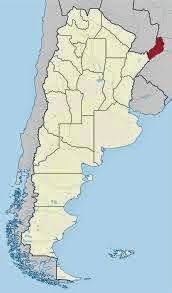
Misiones province is colored red
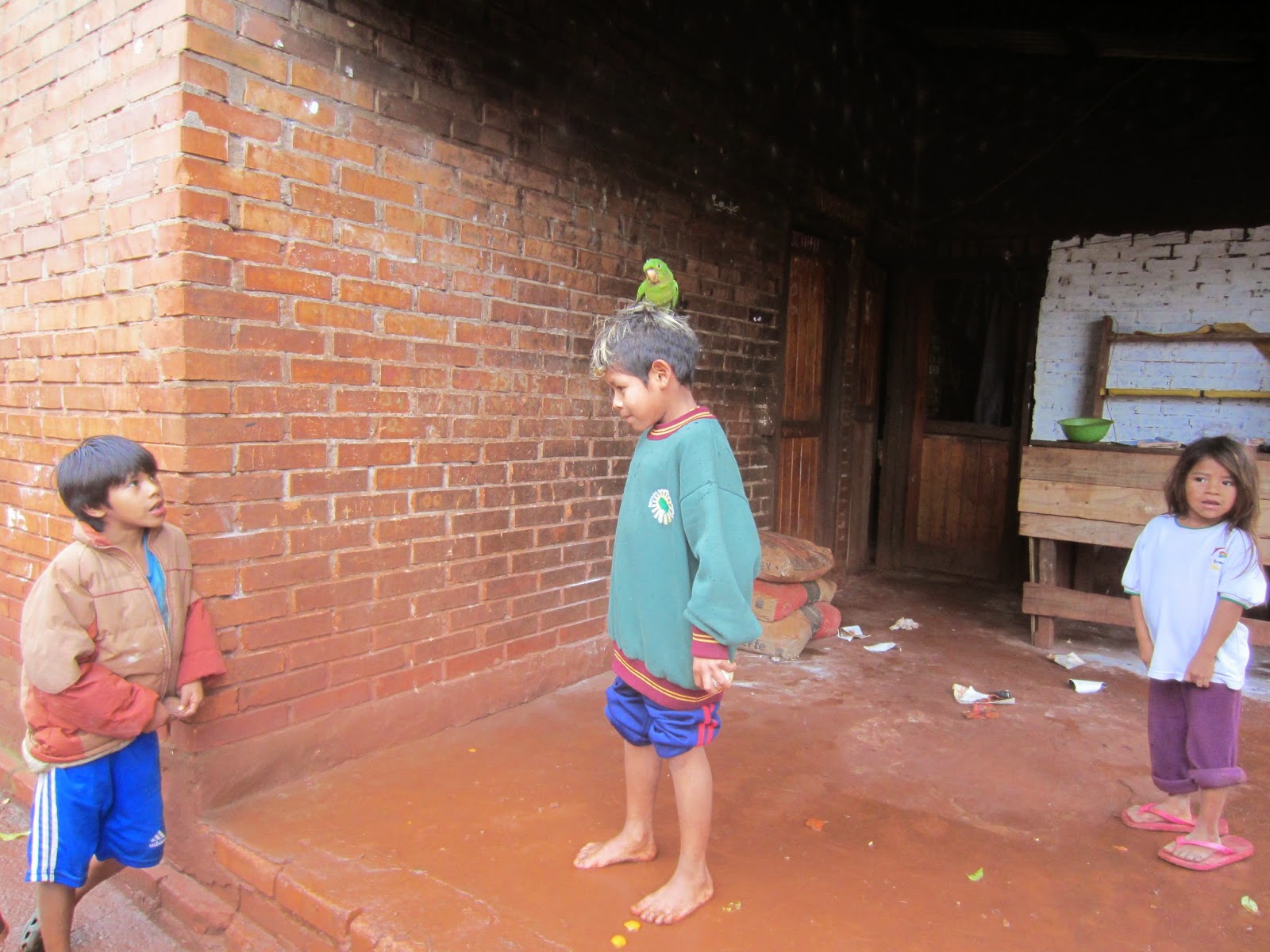
A second fundamental difference is seen in the culture of the people. The inhabitants of Peruti were primarily of Guarani descent, the indigenous tribe that before colonisation inhabited northern Argentina, southern Brasil and Paraguay. The people have kept many of the old customs and Guarani traditions, and still speak Guarani amongst themselves as well as Spanish. In fact, Guarani has inherited many words from Spanish for new words and phrases that didn't exist before in traditional Guarani. 

The people themselves live in relative poverty. Access to clean running water is limited and sometimes non-existent. I was surprised to find that the tap I had been using to clean the pots and pans after food preparation stopped supplying water when the rains stopped and the sun came out. Children prefer to run barefoot through the red muddy soil, some unclothed, and the lack of access to food cannot be overemphasized. 


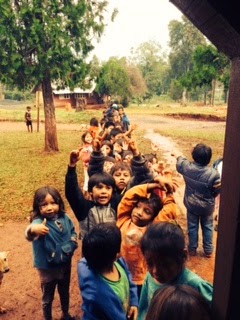
The children line up for the cereal and milk handout
Recently, the national government just finished a building project in the village, supplying clean homes for families that needed them. While the project has supplied many families with brand new homes, I wonder at the motives for the project. So often the national government, which relies heavily on the poor and unemployed, gives handouts to people in order to ensure votes and stay in power. While I am glad that now many of the children in the village have clean, safe homes to return to every day, I wonder at the motives for the current government, which is currently oversaturated with corruption charges and has been under the spotlight since it took power in 2003.

Having worked for L.I.F.E, the non-profit group that organized the trip, in both the Villas in Buenos Aires and in Peruti village, I must say one of the most impressive differences for me was in the attitudes of the people in the village. It is true that in both the villas and the village the people are gripped by poverty on a daily basis. In both places they grapple with hunger and a hidden future, and most girls don't reach 18 before they've had their first child. Yet the people in the village, in contrast with many people in the villa, had a humbleness to them, an innocence that hadn't been tarnished by proximity to the offerings and enticements of city life, which seems to have had such a negative impact on those living in the villa. Despite the poverty, physical disabilities, lack of food, clothing, and of course lack of luxuries, the people in the village seemed to live contentedly with what they had, perhaps partly because they didn't know what they were missing or perhaps because they didn't know what the outside world had to offer.

Lice checks with Kaja and Anna
We spent a total of three days in the village. Our duties included preparing food for the women and children, Preparing the clothing for the women to pick up for their families, doing lice checks, spending time touring the village with the children. For me, one of the highlights I found was the deep well of joy that the people seemed to have. The competitive nature of wanting more, of ambition, seemed non-existent. Perhaps one of the few if only upsides of living in poverty is that you adjust and find contentment in the simplicity of existence at the bare minimum. Perhaps a key to happiness is in maintaining this simple contentment even when you do not live on the margins or live in poverty. 

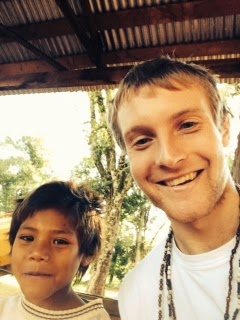
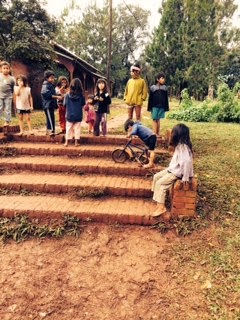
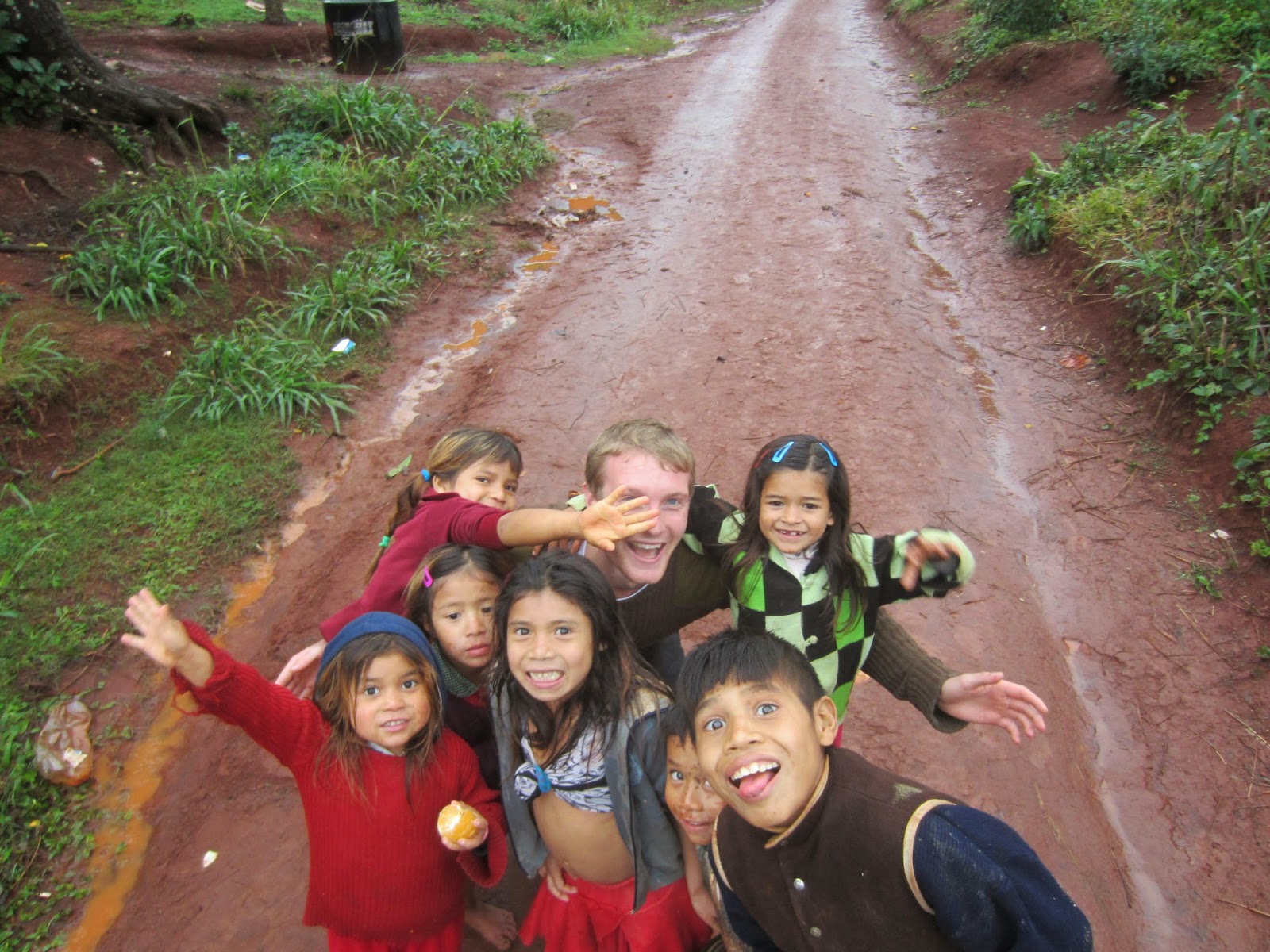
My favorite moments were spent with the children. They showed us their cemetery, a mixed assortment of cross-marked graves a little ways outside the village. Afterwards we walked around the village, seeing it from the children's perspective. This is one of the few places I've seen in recent years where children still play outside. They are not monitored constantly by the parents but run freely, reminding me of my childhood memories of outdoor adventures in Vermont.

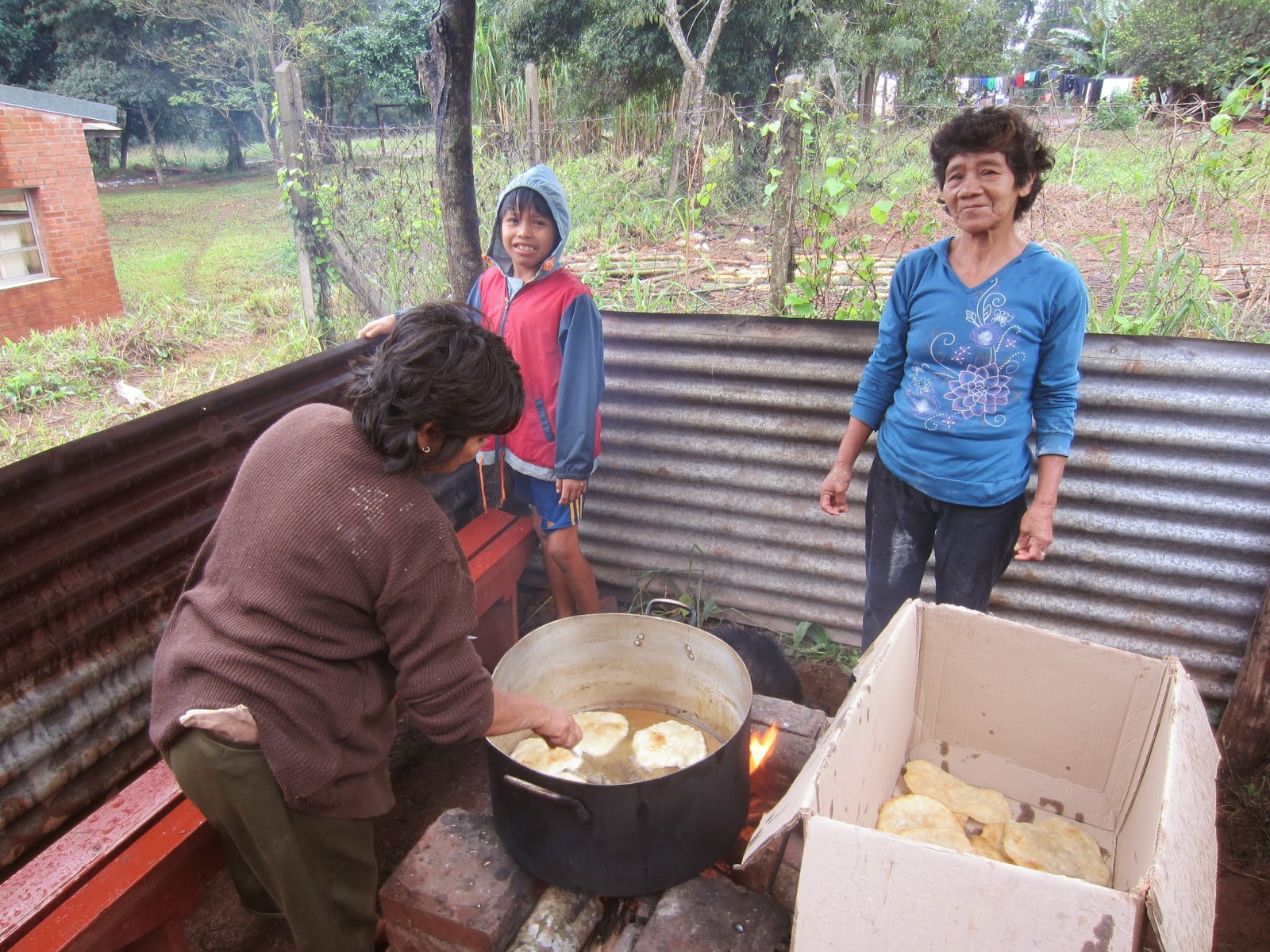
Preparing pan frito for everyone.
A shoutout to the simple pleasures. Que rico! 
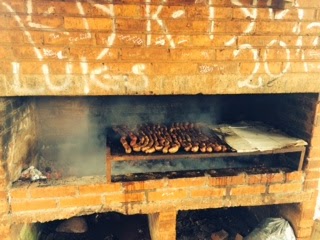
On Sunday, our final day in the village, I helped a local Misionero named Nino prepare an asado for the villagers. We began preparation at 10 in the morning and by 3:30 in the afternoon we had cooked a total of 450 chorizos and 90 hamburgers. 

I can continue to describe the experience in the village. But I think perhaps pictures can describe better than words the atmosphere and the people. The experience was transforming. To be immersed in such a different culture and way of life gives one a profoundly different worldview. You return to the frenetic, competitive atmosphere of the city with a sense that this culture of wanting more doesn't need to be the only culture we can choose to adopt. I've seen another culture in which those who live simply, even in poverty, can find a deeper and longer-lasting contentment than those living for more.  

Shared memories

Chorizo for all

El asador and his assistant

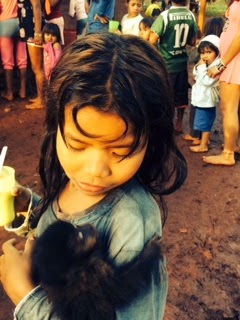
I wish I had a pet monkey

Children at play while I prepare the chorizos

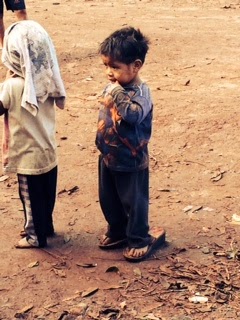
Hmmm, just look at those shoes!

He just needed to show us his pet bird!

To the memories that last

And happiness shared

No matter the circumstances, happiness and contentment can be found if you are willing to see and accept it. That is perhaps the most important lesson I learned from working in Peruti, and one I will always hold close to heart.

Until next time,

Kyle